After months of lockdowns restricting work and movement, many countries have begun to lift the drastic measures they put in place in order to slow the spread of coronavirus.
European nations have embarked on the gradual process of reopening their economies, following in the footsteps of China, where the virus originated and which locked down earlier.
But the economic fallout from the pandemic looks to be one of the biggest shocks in generations. Normal economic activity has been disrupted on an unprecedented scale in peacetime as the patterns of everyday life have been upended.
Governments are intervening in an attempt to stave off the collapse of companies and livelihoods. Many economists believe the world has already entered a recession.
The Financial Times will be tracking the impact here.
Real-time indicators
Real-time data can provide a snapshot of how the shutdowns have affected economies before official data can capture it. Here we will be tracking some key indicators of daily activity:


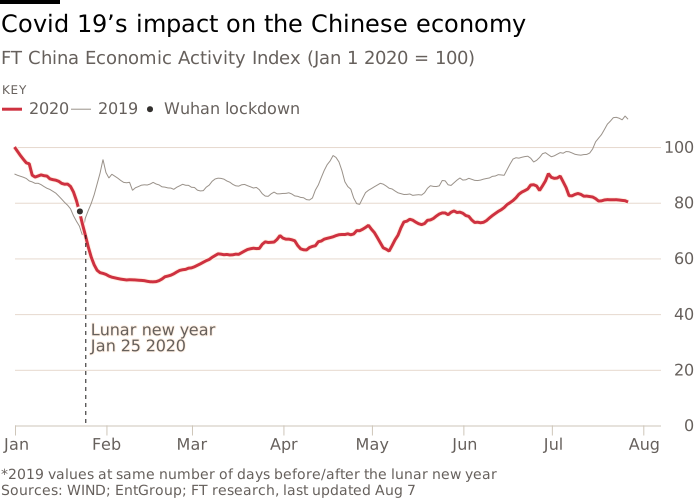
The Financial Times China Economic Activity Index
China’s slowdown due to the coronavirus outbreak has been pronounced and consequential for the global economy. In order to track these changes, the FT has constructed its own measure of the slowdown and nascent recovery in the Chinese economy.
Official data lags behind activity since it is mostly monthly, and China’s data are sometimes viewed as open to political manipulation.
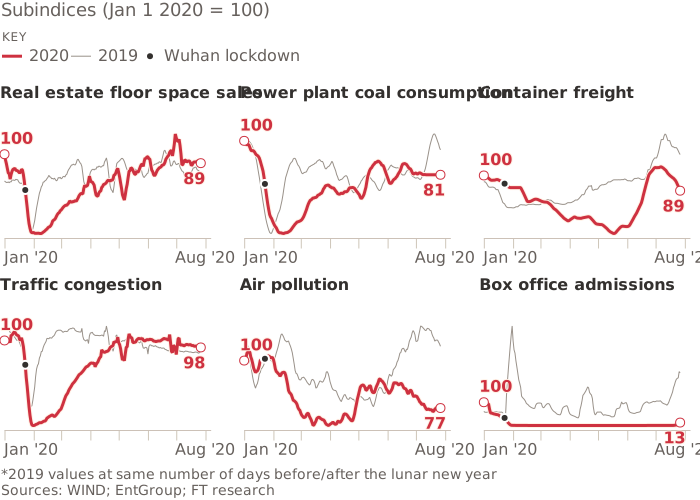
Using Wind’s financial database, we have compiled a weighted index of six daily, industry-based data series.
The measures of the domestic economy include real estate floor space sales, traffic congestion within cities and coal consumption in large power plants. Trade activity is represented by container freight.
Two other indices, which have been given a lesser weighting, provide social and environmental context: box office numbers from Chinese cinemas — a good proxy on consumer activity — and air pollution in the 10 largest cities.
The Financial Times has collated Nasa satellite data showing concentrations of nitrogen dioxide before, during and since the lockdown in Wuhan on January 23.
About 50 to 70 per cent of NO2 sources correspond to thermal power generation, heating and industrial boilers — all of which are concentrated in the hyper-polluted north China plain. About one-fifth derive from transport.